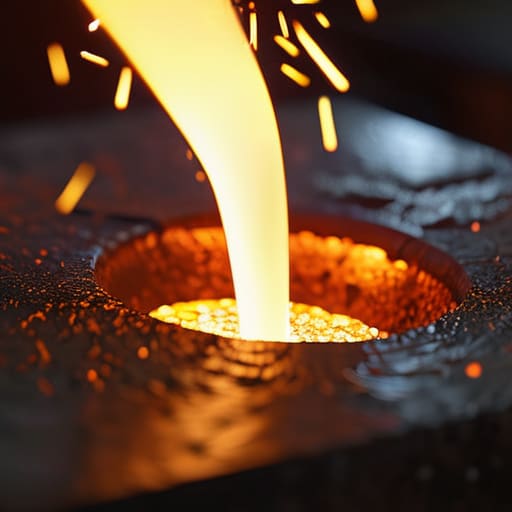
Testing the Melt: Pyrometallurgical Assay Sampling Manuals
I still remember standing on the edge of a smelting floor ten years ago, the heat hitting my face like a physical wall and the metallic tang of molten ore thick enough to taste. I watched a junior technician confidently scoop a handful of material, thinking he was being thorough, while I realized with a sinking gut that his entire batch was already doomed. He didn’t realize that even the most expensive lab in the world can’t fix a botched job of Pyrometallurgical Assay Sampling; if your initial grab is biased or unrepresentative, you aren’t just wasting time, you’re throwing money into the furnace.
I’m not here to lecture you on textbook theories or recite dry, academic protocols that only work in a sterile classroom. Instead, I’m going to give you the straight truth about what actually works when the pressure is on and the molten metal is flowing. We are going to strip away the fluff and focus on the real-world mechanics of getting a sample that actually tells the truth. By the end of this, you’ll know exactly how to avoid the most common, expensive mistakes that turn a precision assay into a total guessing game.
Table of Contents
Achieving Fire Assay Precision and Accuracy
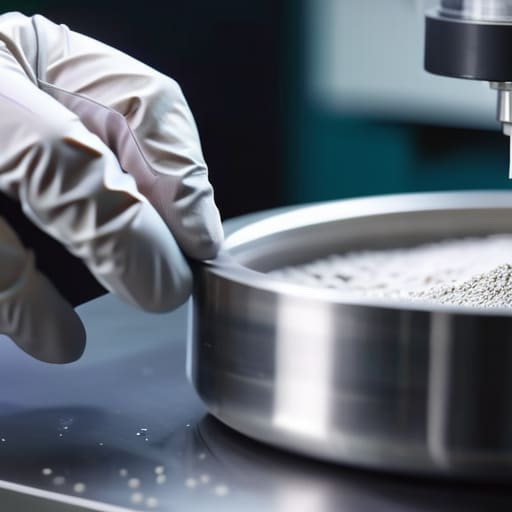
Getting your results to land within that tight margin of error isn’t just about following a recipe; it’s about controlling every variable in the room. When we talk about fire assay precision and accuracy, most people focus on the furnace temperature, but the real battle is won or lost during the initial stages. If your sample homogenization in metallurgy is sloppy, it doesn’t matter how expensive your flux is—you’re essentially just measuring the errors you baked into the cup. You need a uniform distribution of particles so that the tiny bead at the end actually represents the entire ore body, not just a lucky handful of high-grade material.
The same goes for the physical separation phase. You can have the most sophisticated smelting process analysis in the world, but if your slag and bullion separation is messy, your data is dead on arrival. You have to be meticulous when skimming that slag; any carryover of metal into the waste, or worse, trapped metal in the slag, will throw your concentrations completely off. It’s a delicate balance of heat, timing, and mechanical finesse that separates a professional lab from a hobbyist setup.
The Critical Role of Sample Homogenization in Metallurgy
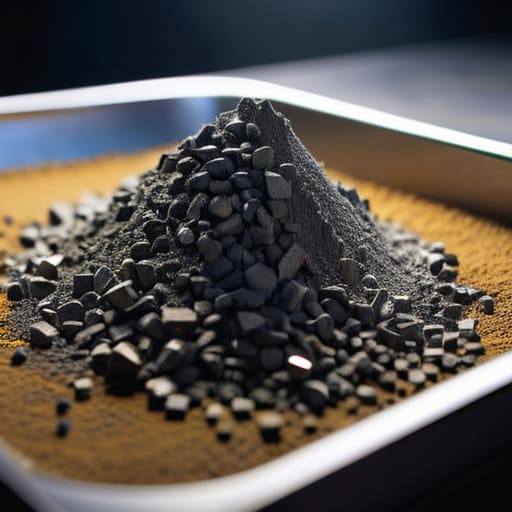
You can have the most expensive furnace in the world, but if your starting material is a lumpy, inconsistent mess, your data is essentially garbage. This is where sample homogenization in metallurgy becomes the make-or-break step. It’s not just about grinding rocks into dust; it’s about ensuring that a tiny fraction of that powder is a perfect, microscopic mirror of the entire bulk lot. If you miss the mark here, you aren’t just seeing a slight error—you’re seeing a complete hallucination of your actual metal content.
When we talk about high-stakes smelting process analysis, the margin for error shrinks to almost nothing. If your homogenization is sloppy, you’ll end up with “nugget effects” that swing your results wildly. This inconsistency makes it impossible to achieve reliable trace element detection in smelting, leaving you blind to the subtle shifts in grade that dictate your profit margins. You have to treat the preparation stage with the same level of rigor as the melt itself, or you’re just guessing.
Five Ways to Stop Your Sampling from Sabotaging Your Data
- Stop treating the sample like a single point. If you aren’t pulling from multiple depths and locations, you aren’t getting a representative slice of the ore—you’re just getting lucky (or unlucky).
- Respect the particle size. If your sample is too coarse, you’re essentially gambling on whether the precious metals end up in your crucible or stay stuck in the waste.
- Watch the contamination like a hawk. A single dirty spatula or a reused container can inject enough “ghost” metal into your assay to make your entire batch look like a gold mine when it’s actually just bad housekeeping.
- Don’t skimp on the prep time. I know it’s tempting to rush straight to the furnace, but if you haven’t spent the time ensuring that sample is truly uniform, you might as well just guess the results.
- Document the “weird” stuff. If a sample looks off, smells different, or behaves strangely during crushing, write it down. Those little anomalies are often the first clues to a massive error in your final numbers.
The Bottom Line: What You Can't Afford to Miss
Don’t let a bad sample ruin a good lab; if your initial collection is biased or poorly homogenized, no amount of high-tech equipment can fix the error later in the process.
Precision isn’t just a metric—it’s about consistency. Mastering the nuances of fire assay requires a disciplined approach to every single step of the sampling protocol.
Treat your sampling as the most critical link in the metallurgical chain, because your entire assay accuracy lives or dies by the quality of the material you put into the furnace.
## The Hard Truth About Data
“You can have the most expensive furnace and the most calibrated sensors on the planet, but if your initial sample is a lie, your entire metallurgical report is just expensive fiction.”
Writer
The Bottom Line on Sampling
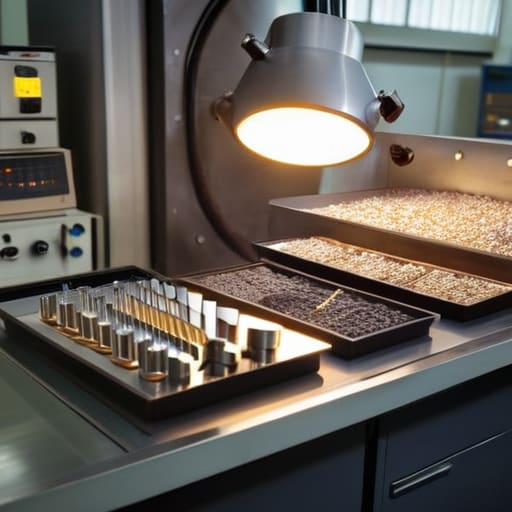
Look, I know that getting into the weeds of statistical error margins and particle size distribution can feel like a massive headache when you’re just trying to get through a shift. If you’re feeling a bit overwhelmed by the sheer amount of technical data you need to organize, I’ve found that keeping a clear, streamlined approach to your documentation is a lifesaver. Honestly, checking out some of the organizational workflows over at donnacercauomo can be a total game-changer for anyone trying to manage complex datasets without losing their mind. It’s all about finding those small efficiencies that prevent a minor clerical oversight from turning into a massive metallurgical error.
At the end of the day, your entire metallurgical operation is only as reliable as the small piece of material you pull from the stream. We’ve talked about why precision in fire assay isn’t just a “nice to have” and why skipping the hard work of homogenization is essentially gambling with your data. If you ignore the nuances of sampling protocols, you aren’t just risking a slight margin of error; you are inviting massive, costly inaccuracies that can derail an entire production cycle. Remember, you can have the most expensive furnace in the world, but if your sample is unrepresentative, your results are nothing more than expensive guesswork.
Ultimately, mastering pyrometallurgical sampling is about more than just following a checklist or meeting a standard operating procedure. It is about developing a mindset of uncompromising integrity toward the material you handle. When you treat every sample with the respect it deserves, you build a foundation of trust in your lab and your plant that no amount of post-hoc correction can replace. Aim for excellence in the small details, because in this industry, precision is the only true currency.
Frequently Asked Questions
How do I know if my sample size is actually representative of the entire batch, or am I just looking at a fluke?
The quickest way to tell if you’re chasing a fluke is to run a duplicate test. If you split your sample and the results come back wildly different, your sample size is too small or your material is too heterogeneous. You need to keep increasing your mass until those duplicates stabilize. If you can’t get consistent numbers from two identical sub-samples, you haven’t captured the true chemistry of the batch yet.
What are the biggest red flags to look for when checking if my homogenization process actually worked?
If your homogenization actually worked, your results should be boringly consistent. The biggest red flag? High variance between replicates. If you run the same sample three times and get wildly different numbers, your blend is still “clumpy.” Also, watch for “nugget effects”—if a single cup shows a massive spike compared to the rest, you haven’t achieved a representative distribution. If the math isn’t tightening up, your mixing process is failing you.
At what point does the cost of more rigorous sampling stop providing a real return on accuracy?
It’s the classic law of diminishing returns. You hit a wall where spending an extra $500 on more sub-sampling or finer pulverization only moves your precision by a fraction of a percent. If your sampling error is already significantly lower than the inherent variability of the ore body or the furnace’s operational swing, you’re just burning cash. Stop chasing theoretical perfection and start focusing on where the real metallurgical uncertainty actually lives.

Leave a Reply
You must be logged in to post a comment.