Unraveling the Fabric of Change: Embrace Sustainable Fashion Now
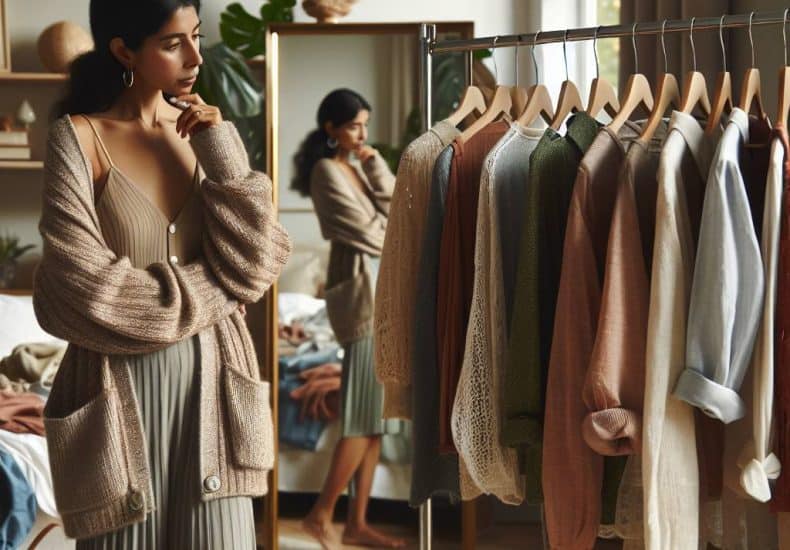
I once found myself standing in front of a mirror, drowning in the irony of my own closet. A kaleidoscope of “sustainable” fabrics promised to save the world, yet the tags still whispered the tales of sweatshop whispers and air miles. It’s like trying to find enlightenment in a supermarket aisle. My conscience, wrapped up in a vintage cardigan, debated whether my love for fashion was simply a well-dressed excuse for consumerism. I mean, who was I kidding? That organic cotton tee didn’t make me a saint—it just made me feel a little less guilty while I scrolled through endless pages of online sales.

But here’s the twist—there’s a better way to navigate this sartorial circus without losing our souls (or our wallets). Let’s unravel the threads of sustainable fashion and find truth in the chaos. We’ll dive into the art of thrifting, the joy of second-hand treasures, and the reality behind eco-friendly labels. Together, we’ll explore how recycling our wardrobe choices can stitch together a more conscious, less destructive narrative. Grab your metaphorical needle and thread. It’s time to mend the fabric of our fashion follies.
Table of Contents
Confessions of a Former Fast Fashion Addict: My Love Affair with Second-Hand Treasures
Once upon a time, my closet was a battlefield, a war zone of cheap fabrics and fleeting trends. Fast fashion was the siren song I couldn’t resist—shiny, new, and oh so affordable. But like any toxic relationship, it started to suffocate me. My love for clothes was real, but the romance was hollow. I was drowning in a sea of polyester, and my wallet was a sieve. Then came the epiphany—a moment of clarity amidst the chaos. I stumbled into a thrift store, expecting nothing more than a dusty treasure hunt, only to find myself reborn amidst the racks of second-hand wonders.
Thrifting, with its eclectic charm and unpredictable finds, became my new obsession. Each visit was a journey into the unknown—a chance to unearth stories woven into every pre-loved piece. The thrill of discovery replaced the shallow satisfaction of fast fashion’s instant gratification. I learned to appreciate the craftsmanship and history behind each garment, imagining the lives they once adorned. It was like stepping into a time machine, where every stitch and button whispered tales of yesteryears. Recycling clothes wasn’t just eco-friendly; it was revolutionary. A rebellion against the soulless cycle of mass production.
And let’s talk about the ego-boost. Wearing a second-hand gem that no one else could replicate? Priceless. It was a statement—a silent protest against the monotony of mass-produced style. My wardrobe transformed into an anthology of unique stories and my carbon footprint shrank along the way. The guilt of contributing to the fashion landfill eased, replaced by the satisfaction of breathing new life into forgotten garments. In this love affair with second-hand treasures, I found not just a new style but a new way of being—one that respects both the planet and the art of fashion itself.
The Truth Woven in Threads
In a world where fast fashion feeds our insatiable hunger for the new, thrifting is the rebellion—an artful act of defiance that turns yesterday’s castoffs into tomorrow’s treasures.
The Threads That Bind Us
Sustainable fashion isn’t just a closet choice; it’s a rebellion against the conveyor belt of consumerism. I didn’t just wake up one day and decide to ditch fast fashion like a fleeting trend. It was more like peeling back layers of a city I thought I knew, discovering hidden alleyways lined with stories in the fibers of old jackets and twice-loved dresses. These aren’t just garments; they’re whispers of past lives, waiting to be part of another chapter. And in choosing them, I’m declaring my independence from the churn of the new, the packaged, the disposable.
But here’s the truth—it’s not about being perfect. My journey through thrifting and second-hand treasures is messy, imperfect, like the city itself. Sometimes it’s a hit, sometimes a miss. Yet every choice to recycle, to reclaim, to breathe life into something discarded is a stand, a statement. A refusal to let my wardrobe be written by someone else. So, I’ll keep weaving my own narrative, one vintage find at a time, finding authenticity in a world that desperately needs it. Because, in the end, aren’t we all just trying to find a place where we fit, a story that makes sense?

Leave a Reply
You must be logged in to post a comment.