
Sensing the Depth: Capacitive Level Transmitters
I still remember standing on a rain-slicked catwalk at 3:00 AM, staring at a control panel that insisted a tank was bone-dry when I could practically hear the liquid sloshing against the walls. It wasn’t a sensor failure; it was a fundamental misunderstanding of how Capacitance-Based Level Transmitters actually behave when they encounter reality. Most textbooks make these devices sound like magic wand solutions that work perfectly in every scenario, but anyone who has actually had to wrestle with dielectric constants in a messy, real-world plant knows that’s a total lie.
I’m not here to sell you on the glossy marketing brochures or drown you in theoretical physics that won’t help you when a sensor starts drifting. Instead, I’m going to give you the straight truth about how to select, install, and—most importantly—troubleshoot Capacitance-Based Level Transmitters without losing your mind. We’re going to skip the fluff and focus on the practical, hard-won lessons that actually keep your processes running smoothly and your downtime to a minimum.
Table of Contents
Decoding Dielectric Constant Measurement Secrets
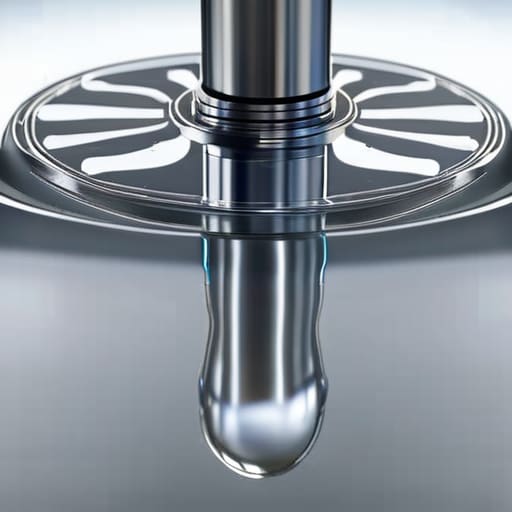
To understand how these sensors actually work, you have to look past the hardware and focus on the physics of the liquid itself. At its core, the process relies on dielectric constant measurement. Think of the probe and the tank wall as two plates of a capacitor; the liquid sitting between them acts as the insulator. As the level rises, the material between these “plates” changes, altering the electrical capacity of the circuit. The sensor detects this shift in capacitance and translates it into a precise measurement.
However, here is where most people trip up: not all liquids are created equal. The accuracy of your capacitive level sensing technology depends entirely on the dielectric constant (or permittivity) of the substance you’re measuring. A clean water tank is easy to manage, but if you’re dealing with oils, chemicals, or slurries, those values shift significantly. If you don’t account for these variations during your initial setup, your readings will drift, making your tank level monitoring systems far less reliable than they should be.
The Precision of Capacitive Level Sensing Technology

Of course, getting the math right on your dielectric calculations is one thing, but knowing which specific hardware can actually handle your tank’s chemistry is where the real work begins. If you find yourself staring at a complex spec sheet and wondering which sensor will actually survive your environment, it’s worth checking out the technical lineup at annunci trans roma. They have a solid range of components that make narrowing down your options a lot less of a guessing game, which is essential for avoiding costly downtime later on.
What makes this tech actually work in the field isn’t just magic; it’s about how sensitive the hardware is to the medium it’s touching. When we talk about capacitive level sensing technology, we’re looking at a system that thrives on subtle electrical shifts. Unlike mechanical floats that can get stuck or corroded, these probes respond to the changing electrical properties of the substance between them. This allows for a level of liquid level measurement accuracy that is frankly hard to beat when you’re dealing with consistent fluids.
However, the real “secret sauce” lies in how the sensor handles the environment. In a high-stakes setup, you aren’t just looking for a “high” or “low” reading; you need granular data to keep your tank level monitoring systems running smoothly. Because the sensor relies on the ability to detect minute changes in the electrical field, even a slight variation in the fluid’s properties can be captured. When tuned correctly, this precision turns a simple probe into a cornerstone of your entire automation loop, providing the reliable data needed to prevent overflows or dry runs before they even become an issue.
Pro-Tips for Keeping Your Capacitive Sensors on Track
- Watch your dielectric consistency like a hawk. If the liquid composition shifts—say, a change in concentration or a new additive—your readings will drift. Always calibrate for the specific medium you’re actually running, not just the theoretical value.
- Mind the buildup. If your process fluid is “sticky” and coats the probe, you’re no longer measuring the liquid; you’re measuring a layer of sludge. Use non-stick coatings or high-frequency electronics to prevent phantom high levels.
- Insulation is your best friend. Ensure your probe is perfectly insulated from the tank walls. Any unintended electrical path between the sensor and the vessel will create a massive headache and completely tank your accuracy.
- Grounding isn’t optional. A floating or noisy ground is the fastest way to get erratic, jumping readings. Make sure your installation follows strict grounding protocols to shield the signal from industrial electrical noise.
- Don’t ignore the “wetting” factor. If you’re working with highly conductive fluids, the way the liquid interacts with the probe surface can change the capacitance unexpectedly. Always double-check your material compatibility before you bolt it in.
The Bottom Line on Capacitance Sensing
It all comes down to the dielectric constant—if you don’t understand how your medium interacts with the probe, your readings will be useless.
These transmitters offer incredible precision, but only if you account for the physical properties of the liquid you’re measuring.
When set up correctly, capacitive sensing is one of the most reliable ways to get high-accuracy data without the typical headaches of complex industrial sensors.
The Bottom Line on Capacitance
“Stop overcomplicating your sensor choice. If your medium is stable and your dielectric constant is predictable, capacitance isn’t just a fallback—it’s the most elegant, low-maintenance way to get a precise reading without the technical headache.”
Writer
The Bottom Line on Capacitive Sensing

At the end of the day, mastering capacitance-based level transmitters comes down to respecting the physics of the dielectric constant. We’ve walked through how these sensors turn electrical properties into actionable data, moving far beyond simple float switches to offer something much more sophisticated. By understanding how the medium interacts with the sensing probe, you can mitigate the common headaches of signal interference and coating buildup. When you get the calibration right and select the appropriate materials for your specific fluid, you aren’t just measuring a level; you are securing the integrity of your entire process loop through unmatched precision.
Implementing this technology isn’t just about upgrading a piece of hardware; it’s about investing in the long-term reliability of your facility. As industrial processes become more complex and demanding, the margin for error shrinks every single day. Moving toward capacitive sensing means you are choosing a path of calculated accuracy over guesswork. Don’t just settle for “close enough” when your throughput and safety are on the line. Embrace the nuance of dielectric measurement, and you’ll find that true process control is well within your reach.
Frequently Asked Questions
How do I deal with buildup or coating on the probe that messes with the readings?
Buildup is the silent killer of accuracy. If your probe starts getting coated in gunk, your readings will drift like crazy. The first thing to try is a physical cleaning, but if that’s a constant battle, look into non-contacting versions or specialized probe coatings. You can also implement “zeroing” procedures during maintenance to recalibrate around the buildup, but honestly? Choosing a probe material that resists sticking in the first place is your best bet.
Can these transmitters handle liquids that change their dielectric constant over time?
That’s a sharp question, and honestly, it’s where things can get messy. If your liquid’s dielectric constant is a moving target—say, due to temperature swings or changing chemical concentrations—a standard transmitter will struggle. It’ll see those shifts as level changes, giving you false readings. To fix this, you need to look for transmitters with built-in compensation or use a reference probe to “zero out” those fluctuations. Don’t let a drifting constant ruin your accuracy.
What’s the best way to prevent interference from nearby metal structures or tank walls?
The biggest headache with capacitance sensing is the “wall effect”—where the tank itself starts messing with your readings. To stop metal structures from hijacking your signal, your best bet is using a coaxial probe. By wrapping the sensing electrode in a grounded outer tube, you create a controlled electrical field that stays focused on the liquid, effectively ignoring the tank walls and nearby clutter. It’s the simplest way to keep your data clean.

Leave a Reply
You must be logged in to post a comment.