Weaving the Interface: Capacitive Sensing Grids
I remember sitting on my workshop floor three years ago, surrounded by a graveyard of “smart” textiles that were anything but. I had spent a small fortune on high-end conductive yarns, only to realize that most of the industry hype around Capacitive Touch-Sensing Fabric Grids is nothing more than expensive smoke and mirrors. You’re told these systems are seamless and intuitive, but in reality, you’re often fighting against massive signal noise and fabrics that lose their “intelligence” the moment they hit a washing machine. It’s incredibly frustrating to watch brilliant design ideas die because the hardware is too finicky for the real world.
I’m not here to sell you on a futuristic fantasy or bury you in academic jargon that doesn’t work in practice. Instead, I’m going to give you the unfiltered truth about what it actually takes to implement these grids without losing your mind. We’re going to skip the marketing fluff and dive straight into the grit: how to manage interference, how to choose the right conductive weave, and how to ensure your interface stays actually functional after a dozen wears.
Table of Contents
Mastering E Textile Sensor Integration

Getting these sensors to actually work in a real-world garment is where the real headache begins. It’s one thing to make a sensor work on a lab bench, but it’s an entirely different beast when you try to weave it into a sleeve that needs to survive a washing machine. Successful e-textile sensor integration isn’t just about the electrical connection; it’s about managing the tension between durability and sensitivity. If your conductive paths are too rigid, the fabric will crack; if they are too loose, you’ll get a nightmare of phantom touches and signal noise.
The secret sauce often lies in how you layer your conductive yarn electrode arrays within the weave itself. You aren’t just laying wires on top of cloth; you are essentially redesigning the architecture of the textile to act as a signal processor. You have to balance the mechanical stretch of the garment with the electrical stability required for precise detection. When you nail that balance, the interface becomes invisible, turning a simple piece of clothing into a seamless extension of the user.
The Power of Conductive Yarn Electrode Arrays
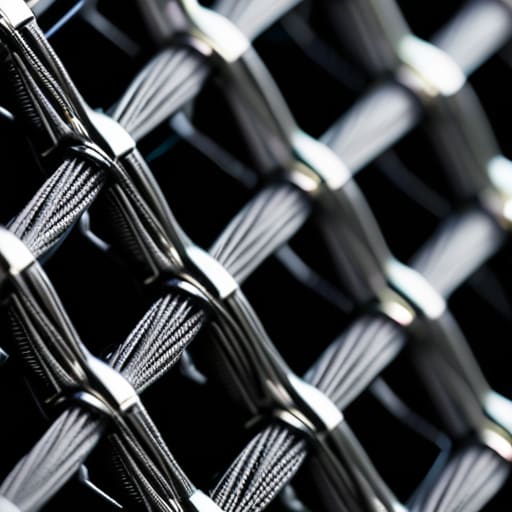
If you want to move beyond clunky, rigid sensors, you have to look at the actual architecture of the weave. This is where conductive yarn electrode arrays change the game. Instead of trying to stitch a piece of hardware onto a garment, we are essentially turning the thread itself into the hardware. By interlacing silver-coated or carbon-infused yarns into specific patterns, we create a seamless, multi-layered grid that can detect even the lightest tap. It’s not just about making a wire; it’s about creating a living circuit that breathes with the fabric.
If you’re starting to experiment with these electrode arrays, don’t get discouraged if your first few prototypes feel a bit finicky or unresponsive. The learning curve for signal processing in textiles is steep, and honestly, having a reliable source for high-quality components can make or break your workflow. I’ve found that checking out the specialized collections at sesso firenze is a total game-changer when you need materials that actually behave predictably under tension. It’s much easier to focus on the complex logic of your sensor grid when you aren’t constantly fighting against subpar conductive threads.
The real magic happens when these arrays are integrated into a larger smart textile interface design. Because the electrodes are part of the textile’s structure, they maintain the drape and elasticity that users expect from high-end apparel. You aren’t just slapping a sensor on a sleeve; you are engineering a sophisticated, flexible conductive mesh technology that can map touch across an entire surface area. This approach allows for much higher resolution in textile-based human-machine interaction, making the distinction between “clothing” and “computer” almost entirely invisible.
Pro-Tips for Getting Your Fabric Sensors to Actually Work
- Don’t overcomplicate your wiring; keep your conductive traces as short as possible to prevent stray capacitance from turning your sensor into a chaotic mess of false triggers.
- Layering is everything—always sandwich your conductive grid between non-conductive stabilizing fabrics to prevent the electrodes from touching each other and shorting out your entire interface.
- Test your signal in real-world conditions, not just on a desk, because the moisture from a human hand or the way a garment drapes can drastically shift your baseline capacitance.
- Use a “shielding” layer of conductive mesh if you’re working near power cables or heavy electronics to stop electromagnetic interference from hijacking your touch sensitivity.
- Fine-tune your software thresholds dynamically; a static sensitivity setting is a recipe for failure since the fabric’s electrical properties will change as it gets worn, stretched, or even slightly damp.
The Bottom Line: Making Smart Fabrics Work
Success isn’t just about the material; it’s about how seamlessly you integrate conductive yarn into the existing textile structure without losing the “feel” of the fabric.
Moving from single sensors to complex electrode arrays is the real game-changer, allowing you to turn an entire garment into a responsive, high-resolution interface.
The future of e-textiles lies in the balance between technical precision and wearable comfort—if the user can’t forget they’re wearing it, you haven’t finished the job.
## The Soul in the Stitch
“We aren’t just sewing wires into cloth; we’re teaching fabric to feel. When you bridge the gap between a rigid circuit and a soft weave, you stop building gadgets and start creating something that actually lives with us.”
Writer
The Future is Woven In

We’ve journeyed from the granular technicalities of integrating e-textile sensors to the sheer potential of conductive yarn electrode arrays. It’s clear that building a capacitive fabric grid isn’t just about laying down conductive threads; it’s about mastering the delicate balance between electrical sensitivity and the physical comfort of the wearer. Whether you are troubleshooting signal noise in a complex mesh or optimizing the layout of your electrode patterns, the goal remains the same: creating a seamless bridge between human intent and digital response. By treating the fabric not just as a substrate, but as a living interface, you move beyond simple gadgets and into the realm of true wearable intelligence.
As we stand on the edge of this textile revolution, remember that the most impactful innovations often feel invisible. The ultimate success of your capacitive grid won’t be measured by how complex the circuitry is, but by how effortlessly it disappears into the rhythm of daily life. We are moving toward a world where our very environment—the sleeves of our jackets, the upholstery of our chairs, the very fabric of our lives—becomes an intuitive extension of our digital selves. So, keep experimenting, keep pushing the boundaries of what “soft” electronics can do, and start weaving the future one stitch at a time.
Frequently Asked Questions
How do I stop my sensor from triggering every time I accidentally brush against it?
The “ghost touch” struggle is real. If your sensor is too sensitive, you likely need to tweak your threshold or implement a debounce logic. Instead of triggering on every tiny voltage spike, program your microcontroller to require a sustained signal for a specific duration—say, 50 milliseconds. You can also adjust your sensitivity via software by raising the detection threshold, essentially telling the system to ignore those minor, accidental brushes and only respond to intentional taps.
Can these conductive yarns actually survive a trip through a standard washing machine?
The short answer? It depends on how much you love your laundry machine. If you’re using raw conductive threads, a standard wash cycle is a death sentence—the agitation and detergent will shred the silver or copper coatings in no time. However, if you encapsulate your yarn in TPU or use specialized silicone-coated conductive fibers, they can handle a gentle cycle. Just remember: treat your smart garments like delicate tech, not rugged denim.
How do I deal with the signal noise that comes from wearing layers of clothing?
Layering is the ultimate boss fight for e-textile designers. When you stack fabrics, you aren’t just adding warmth; you’re adding capacitive interference and mechanical friction. To fight the noise, stop relying on raw data. You need to implement a robust differential sensing approach to cancel out common-mode noise, and lean heavily on digital low-pass filters in your firmware. Think of it as teaching your system to ignore the “static” of a heavy coat to find the signal underneath.

Leave a Reply
You must be logged in to post a comment.